In this section are thoughts on whatever comes to mind,
no limit on topics, written for this web site. When
I get the impulse, I’ll write thoughts and add them to
what’s already here (I don’t plan on ever deleting any
thoughts). For each thought, there will be a title,
length, the month and year I wrote it, a blurb on what
it’s about, and a PDF of the thought.
To get a sense of who I am and how I see things and
what's going on with me, you could read these thoughts in
order beginning with "On Foucault," the June, 2007
thought. The thoughts are self-contained, however, and you
can read them in any order.
If the PDFs are oversize, adjust them to accommodate your
reading preference..
Beginning in 2018, I'm going go put the latest thought
at the top rather than at the bottom.
· Revisiting
the Teddy Bears, 1p., July, 2024
An email to my nineteen-year-old daughter Dee about a
1958 hit song called “To Know Him Is to Love Him” by a
group called the
Teddy Bears. Read the email here.
· On a Reply to
a Social Service Check-In, 2 pp., February, 2024.
Every once in a
while, social service people check up on me via email—how
are you doing?Today’s reply
to such an inquiry.Read it here.
·On
the Large Number of Strikeouts in Baseball, 2 pp.,
August, 2023.
From a recent Phil Mushnick column in the New York
Post; “Giants-Yankees . . . of the 51 outs, well
more than half — 32
(63 percent) — were strikeouts.”To
understand what’s going on, it helps to take into account
that the distance from the
pitcher’s mound to home plate, set 130 years ago, is still
60’6”. Read
the complete thought here.
·On
Sinead O’Connor, 2 pp, July, 2023.
Sinead O’Connor, born in 1966, an Irish
singer/songwriter who attained world-wide, pop-star fame
in the early 1990s, died in London on
July 26th, 2023.Read
the thought here.
·On
the Hollywood Star System, 1 p, July, 2023
I decided to take a look at the movie
“Picnic,” which I knew was well received back in the
‘50s and found it to be, indeed, a well-crafted
film, William Inge, Joshua Logan, and all. But . . . Read the full
comment
here.
·
On Irving Berlin, 3 pp., December, 2022.
Irving Berlin (1888-1998) was an American composer and
lyricist. On
his 100th birthday tribute, famed broadcast
journalist Walter
Cronkite said Berlin "helped write the story of this
country, capturing the best of who we are and
the
dreams that shape our lives.” Read the
thought here.
•On “Museum
Hours,” 2 pp.April,2022.
“Museum Hours” is a 2012 film by Jem Cohen.I streamed it
back in 2014 and was so taken with it I bought the DVD,
which
I’ve watched several times since and it has always been
a rewarding experience.This time, I particularly picked up on how,
or so I believe, the film was created. Read the thought
here.
•On the Death of
Virginia Maier, 1p., March, 2022.
Vivian Maier (1926–2009) was an American street
photographer.She
worked for forty years as a nanny while pursuing
her photography, which she didn’t share.Her work was
discovered and highly lauded after her death.Read the
thought here.
•On the Bingo Incident, 2 pp.,
January, 2022.
I don’t know if bingo is still played these years.What I’m
recounting here
happened back in the 1940s
•On
“The Comfort of Strangers,” 2 pp., December, 2021.
They really had it going with the 1990 film, “The
Comfort of Strangers," but didn’t complete the job.Read the film
review here.
•On
“To Tell the Truth,” 3 pp., December, 2021.
The past couple of weeks, a
game show from sixty years ago has been part of my life.Episodes are
online and I watch them just
about daily.The
show, “To Tell the Truth,” which was on CBS as I remember
in prime time. Read
the thought here.
• On
Therapy, 7 pp., November, 2021.
This is about talk therapy.You go once
week, or maybe more often, and tell someone about your
problems. Read the thought here.
•On
Why I Didn’t Watch the World Series This Year, 3pp.,
November, 2021.
After a long lifetime of watching the World Series on
television, this year (2021) it never crossed my mind.I asked myself
why. I
came up with an answer. Here
it is.
•On
Three Empowering Personal Qualities, 2 pp., October,
2021.
I’ve concluded that there are three personal
qualities—or attributes, or characteristics—that
particularly contribute to living
well. Read
about the three here.
•On
Doctors, 5pp, October, 2021,
Medical doctors do a lot of good
in the world.I
do have some reservations about them, however,
particularly around their
treatment of personal problems, and I’ll go into that here.
• On Roy Rogers Riding
Tonight, 6 pp, October, 2021.
I don’t know how much people these days know about Roy
Rogers, but he was big when I was growing up in the ‘40s
and ‘50s,
a singing cowboy in movies, and then he had a half-hour
TV show.This
thought is about him . . . and me.Read it here.
• On Ross Macdonald, 2 pp., September, 2021.
I’d read here, there, and everywhere about what a
world class writer Ross Macdonald (1915-1983) was. I had
never read anything
by Macdonald and picked The Chill, published
in 1964, which is ranked high on the “Macdonald’s
best” lists.
Read the thought here.
•On
the Leopold-Loeb Case, 2 pp., July, 2021.
These days in retirement, I go wherever my impulses take
me.I don’t
try to figure anything out, I just do what I’m told.This
past weekend, it was a book on a murder case from the
1920s, the Leopold-Loeb case, that I had heard about all
of my life.Two
rich college students from Chicago murdered a young boy
for the excitement of it—or something like that, that’s
as much as I
knew.Read
the thought here.
•
On What The New York Times Didn’t Consider Fit to
Print, 2pp., June, 2021.
I submit comments now and again to articles in The
New York Times.Some are accepted, some not.Here’s a
comment that was
met with
silence—they don’t even let me know why a comment is
unacceptable.Read
the thought here.
• On the West
Memphis Three, 3 pp., June, 2021.
After a long lifetime of paying little attention to true
crime, suddenly I’m caught up with it. The latest,
the West Memphis
Three case. Read the thought here.
• On the Flashy Uniform Challenge, 1 p., May, 2021.
Here’s a picture of two guys who I think set the upper
limit for flashy uniforms. My challenge to you is
to come up with a flashier
uniform than these two did. Bet you
can’t. See the picture here.
•On
Canadian Serial Killers, 4 pp., April, 2021.
It’s been Canadian serial killer week for me.All of the
cases I’ll refer to here received enormous media
attention in Canada,
one of them in
the early 1990s and the other three around 2010. I hadn’t
known of any of them until the last few days. Read the
thought here.
• On What’s Wrong
with Baseball, 5 pp., April, 2021.
I’m a big fan of New
York Post sports columnist Phil Mushnick.This thought
is an email I sent to him in response to his
column of April 17th, 2021 entitled “Exploiting Shift is
Just Part of Playing True Winning Baseball.”Read the
email here.
•
On Tim O’Brien (and Me), 4 pp., March, 2021.
Tim O’Brien (1946-) is an American novelist. I’ve spent the
past couple of days with O’Brien in a way, or I suppose
better,
reacting to him.
First, I watched the 2021 documentary on him, “The War
and Peace of Tim O’Brien,” which inspired me to
read his 2019 book, Dad’s Maybe Book.Read the
complete thought here.
• On
Staying Clear of Straight Men, and Whether Gerard
Depardieu Could Be Any Fatter, 2 pp., March, 2021.
“Let the Sunshine In,” released in 2017,
is a superbly made film.Dialogue, cinematography, editing, Juliette
Binoche and
every other actor, first
rate.Intelligent,
classy, worth my time.That acknowledged, I found it one-note and
didactic.See
the
complete review here.
•
On Not Taking What Isn’t Freely Given, 3 pp.,
February, 2021.
The past couple of months, I have been looking for ways
to come at a fundamental issue: how should I be with
other people? Read
the thought here.
• On MaeBorenAxton,
3
pp., February, 2021.
I’ve decided that Mae Boren Axton had nothing to do with
writing Elvis’ first big national hit, “Heartbreak
Hotel.”Read
the
thought here.
• On Honing Our Instrument, 2pp., February, 2021.
A young man wrote me asking about the late
William Pierce’s daily habits—I wrote a book on Pierce
two decades ago--and I
mentioned that Pierce
munched on small chewy candies from a big bowl
throughout his very long workday, I presume for the
sugar
high it gave him.The young man
immediately got back to me asking, I believe seriously,
whether I thought the
candy-munching was a good practice, and I
answered him.As
I looked over the few sentences I had jotted down to
send this
young man, it struck me they summarize
what I think each if us needs to get in place in order
to up our chances of living well,
so decided to share what I wrote with you here.See the
reply here.
•
On the Working Poor, 2 pp., December, 2020.
The past couple weeks, I
watched three films that, tied together, I found
artistically superb, personally moving, and very
thought-provoking.Read the thought
here.
• On the Sensei and William Saroyan, 2 pp., November,
2020.
Trump’s lost and I’m sitting here on this leather couch
letting my mind go where it will and aikido classes I
took years ago pops
into my head.Read
the thought here,
• On How
to Deal with People Like Me, 5 pp., November, 2020.
My grade school and high school friend Ed, as I’ll call
him, from Saint Paul, Minnesota, now a retired dentist,
has an e-mailing list
of people, which includes me, he regularly send things
to that strike him as worth sharing.Read the
thought here.
• On
Making Sense of the Here and Now, 3 pp., November,
2020.
The 2020 World Series has just ended.The manager of
the losing team, the Tampa Bay Rays, took his star
pitcher Blake Snell out
of the deciding game--prematurely, so it was
asserted--in the fifth inning.Read the
thought here.
• On Being a Life Example to Others, 2pp., October,
2020.
At this writing, Amy Coney Barrett has completed two
days of testimony before the Senate Judiciary Committee
as part of her
confirmation as a justice on the Supreme Court.Watching the
televised proceedings, I was taken by Amy’s manner.Read the
thought here.
• On Robert Firestone, 2 p., October, 2020.
I’m bigger on self-help literature than most people. There’s the idea
prevalent that reading science fiction or true crime is
cool, but
giving time and effort to reading about what’s holding
you back from living as well as possible is decidedly
uncool.That’s
not how
I see it. For example,
consider the writings of psychologist Robert Firestone.Read the
thought here.
• On What Some
Songs Add Up To, 6 pp. September, 2020.
Last night, I watched a YouTube of singer Bobby
Hatfield, who was half of a duo called The Righteous
Brothers, performing
the song “Unchained Melody” on the Andy Williams
television show on NBC back in 1965.Read the
thought here.
•On
Advice to a Young Teacher, 3 pp., September, 2020.
A former student of mine when I taught teacher education
courses in the university is now in her late twenties
and a high school
English teacher in the midwestern part of the United
States.She
stays in touch with me by email.This thought
is a portion of my
most recent reply to her.Read it here.
•On
Joanna Hogg, 2 pp.,August,
2020.
Joanna Hogg is a British film director and screenwriter,
and from the three films I’ve seen of hers—she’s made a
total of four—she
is truly brilliant.Read the complete review
here.
•On a
Rejection Hook, 6 pp., July, 2020.
As long as I can remember, I have been attempting to
make sense of, and personally deal with, what I have
come to call a
“rejection hook” that keeps me from living as well as I
would like to.Read
the thought here.
• On Krzysztof Kieślowski, 3 pp., June, 2020.
Krzysztof Kieślowski
(1941-1996) was a Polish film director and screenwriter,
and in my view, a truly great artist.
Read the thought here.
•On
the Casey Anthony Murder Case, 3 pp., May, 2020.
I had a good experience with a couple of true-crime
books by attorneys for the prosecution and defense in
the Casey Anthony murder
trial in 2011.Read
the complete thought here.
•On Saying Goodbye to Michael Jordan,
5 pp., May, 2020.
I’m sitting on my leather couch watching a sports
documentary called “Jordan Rides the Bus,” and about
twelve minutes into it,
it washes over me, “What the hell am I watching this
silliness for?”Read the complete thought here.
•On
My Box Seat, 3 pp., May, 2020.
I find my dreams to be lessons on what is currently
going on with me. I’ll
analyze last night’s dream and the meaning I gave it as
a way of suggesting that you do the same kind of thing
with your dreams. Read
the analysis here.
• On Towards and Avoids, 3 pp, April, 2020.
Recently, I’ve been dividing everything in my life into
two categories.Something
or someone is either a Toward or an Avoid. Read the thought here.
•
On
COVID-19 and Curtis LeMay, 4 pp., March, 2020.
As I write this, the world is under attack from a deadly
strain of coronavirus called COVID-19.People have
been
warned to stay in their houses or apartments hunkered
down in the face of this menacing enemy. Tonight,
hunkered down,
I read a biography
of a World War II air force general by the name of
Curtis LeMay.It
prompted me to compare LeMay
and COVID-19 as killing machines. Read the
complete thought here.
• On Rhiannon, 7 pp., March,
2020.
An excerpt from an email to my fifteen-year-old daughter
about the Welsh mythological figure Rhiannon and a
popular song that
was written about her.Read the excerpt here.
• On What It's Like to Be on Death Row, 1 p., March,
2020.
Voice-over narration from the 1967 film “On Cold
Blood,” about two men, Perry Smith and Dick Hickok,
sentenced to
death for the murder of four members of a Kansas
farm family, Read the narration here.
•On
Getting the Word About Mookie, 3 pp., March, 2020.
At this writing, Mookie Betts, a star outfielder for the
Boston Red Sox, has been traded to the Los Angeles
Dodgers. An old high
school friend sent a mass email to “undisclosed
recipients,” which includes me, with a link to an
article
about the trade he obviously liked.Read the
complete thought here.
• On Movie Messages, 6 pp., February, 2020.
Two movies that got big media hype this
past year were screenwriter and director Quentin
Tarantino’s “Once Upon a
Time . . . in Hollywood” and a South Korean film,
“Parasite.” I
was disappointed with both.Read my review
here.
•On
“The
White Crow,” 2 pp., January, 2020.
As of last night, all I knew about the film “The White
Crow” was that it was about 23-year-old Russian ballet
dancer Rudolf
Nureyev’s 1961 defection to the West in a Paris airport;
I hadn’t read any reviews or anything.Read my review
here.
• On Tennessee Williams, 1 p., January, 2020.
Lines from a Williams play and poem.Read them here.
• On Being Vigilant for Life’s Lessons, 4 pp.,
January, 2020.
A couple of weeks ago, I
decided that it would be a good idea to be vigilant, or
watchful, for lessons about how to best conduct my life
that came to me during course of going about the
activities of my day.Read the complete thought here.
• On “What About Bob,” 3 pp., December, 2019.
I’ve learned to go with my impulses.Even if they
don’t make sense to me when they come up, invariably
later on they do.This was
the case with the old movie “What About Bob?”Read the
thought here.
• On Maren Ade, 2 pp., December, 2019.
Maren
Ade
(born 1976) is a German film director and screenwriter.Judging by the
two films of hers I’ve seen the past few days,
she is top-of-the line at both directing and writing.Read the
commentary here.
• On Ricard Jewell, 2 pp., December, 2019.
Richard Jewell was a security guard
suspected, falsely it turned out, of setting off a bomb
at the site of the 1996 Olympic Games in
Atlanta.At
this writing, a new book has just come out about him.Read my
comments on the book here.
• On John Simon, 2 pp., November 2019.
I read John Simon’s obituary in The New York Times
today. Read
the thought here.
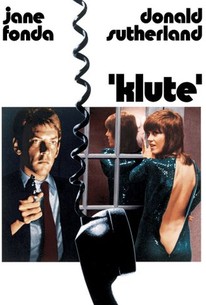
• On John Klute, 4 pp., November, 2019.
“Klute” is a 1971 film
directed by Alan J. Pakula starring Jane Fonda and
Donald Sutherland.Set in contemporary New York City, it
tells the story of a call girl Bree Daniels (Fonda), who
assists a policeman working freelance, John Klute
(Sutherland), with a missing person
case. Over the
years, the Bree Daniels character has been analyzed in
great depth and the John Klute character very little
if at all.
“Vanya on 42nd Street” is a 1994 film directed by French
director Louis Malle. The
film is a rehearsal-type performance of the
classic
Russian play “Uncle Vonya” before a small invited
audience in an abandoned theater in New York City. The last lines
of the play are spoken
to Uncle Vanya by his niece Sonya.Read the
complete thought here.
• On Babe Ruth’s Legs, 8 pp., November, 2019.
Here
are three pictures of the Yankee baseball star Babe
Ruth.Would you
say that he had spindly legs?Long, thin,
frail? Make a call: spindly, not spindly.Read the
complete thought here.
• On
How Life Ends Up, 2 pp., October, 2019.
I spent the past week updating an article I wrote ten
years ago with the intention of submitting it to an
online magazine.When I looked
it over when I
was done, I decided it was old news and dropped the
idea.The
one thing that wasn’t old news in what I had put
together was
an introductory note about why I was doing the update.Read the
complete thought here.
• On
Jimmy Rayl, 3 pp., September, 2019.
I recently thought about an incident involving a former
Indiana basketball player by the name of Jimmy Rayl,
both as he was then and
as he is now (or was,he just
died) Read
the thought here.
• On Sandy Duncan’s Ears, 3 pp., September, 2019.
Sandy Duncan is old now, 73, but
at one time she was really big in the entertainment
field.Read
the thought here.
• On Dying, 5 pp., August, 2019.
I read a book that helped me clarify the difference
between death and dying. Read the thought here.
• On
Being Really Old, 4 pp., August, 2019.
I read a book and saw a film on old age I’d like you to
know about.Read
the thought here.
• On “Detour,” Et al., 8 pp., July, 2019.
Three days ago, I streamed the 1945 film “Detour.”The most
thought-provoking film I’ve seen in my memory.Read the full
thought here.
•
On the Death of James Whale
Revisited, 10 pp., June, 2019.
Out of nowhere it seemed, this week I felt a strong
desire to see the 1998 film “Gods and Monsters,” which I
had seen
before,
eleven years ago.Read
the complete thought here.
•On
Arthur Godfrey and Haleloke, 6 pp., May, 2019.
When I was twelve or so, I watched Arthur Godfrey and Haleloke on television.Read the
complete thought here.
•On Growing Up Well, 3 pp.,
April, 2019.
Dear Dee— A big part of growing up is finding out what
you are good at and like to do.
Read the email portion here.
•On Getting Our Needs Met,
6 pp., April, 2019.
This week,
I’ve been perusing a book about the French-born
intellectual René Girard (1923-2015). Reading the
book has
prompted me to recall a book I read a
year ago, What
Day is Today?The
Story of My Life in the Minor Leagues, and to
reflect
on how we go about satisfying our
needs.Read
the thought here.
•
On Mindfulness. 2pp.,
March, 2019.
I don’t know if it’s the biggest choice we make in our
lives, but a crucially important choice is to be happy.Read the
complete thought here.
• On a Role Model for Dee, 5 pp., March, 2019.
My daughter Dee is fourteen now, a freshman in high
school. Like
every parent, I think about who in Dee’s world she can
look up
to and emulate.It was
reassuring this past week to find just such a person:the singer
Miley Cyrus.Read the thought here.
• On Kurt Vonnegut, 4pp,,March,
2019.
About a week ago, I looked through the biography
and autobiography section of my local library’s e-book
collection, and a book of letters
by the writer
Kurt Vonnegut caught my eye.Read the
complete thought here,
• On Jean Arthur, 4pp., February, 2019.
This week, I read a biography of the
old-time movie actress (she did some stage work after
her movie career ended) Jean Arthur (1900-1990)
that has
stuck with me. Read
the thought here.
• On “Lyle
Mitchell,” 6pp., February, 2019
I was taken
with “Escape at Dannemora,” a seven-part series on
SHOWTIME which aired in November and December of 2018
and I binge
watched in January, 2019.“Escape at
Dannemora” is based on the breakout from a prison in
up-state New York by two life-sentence murderers.
They were abetted in
their escape, as well as sexually serviced, by a prison
employee, Joyce “Tilly” Mitchell.The focus here
is on the
relationship between Tilly and
her husband Lyle.Read the thought here.
• On Getting Better at Golf (and
Other Things Too), 4 pp., January, 2019.
My
fourteen-year-old
daughter Dee, as I call her in public expressions, lives
in another state with her mother.Dee is very
involved with golf
and shoots in the mid-70s and hopes
to play on her high school team and in college.During the
2018 Christmas break from school, she and
her mother traveled to Arizona to
compete in a junior golf tournament.Dee wrote me a
long email just after she returned from the Arizona
trip.She
reported that she didn’t do well in the tournament.A visit to the
Grand Canyon (including the rental Mercedes to get
there)
was a great time.With a bit of
editing, this was my emailed reply to Dee’s message.Read the email
here.
•
On the Interminable Ending of Basketball Games, 4 pp.,
December, 2018.
I’m a regular reader of Phil Mushnick’s sports columns
in The New York Post online.I find him a
breath of fresh air amid all the cheerleading and
inanity
that passes for sports
commentary in our time.Read the thought here.
•
On “First Reformed,” 5 pp., December, 2018.
I’ve written favorably about screenwriter and director
Paul Schrader on this site (see the thought “On Paul
Schrader,” October, 2014). I’ve
changed my mind.Read the
complete thought here.
• On “Just a Sigh,” 3pp., November, 2018.
I suppose to the world, the 2014 French-and-English
language film “Just a Sigh” is three-and-a-half, perhaps
four, stars out of five. But
to me personally, its five stars.I can’t
get enough of it. Read the review here.
• On Dreams as
Life Lessons, 4 pp., October, 2018.
I keep a
notebook and pen on the bed stand and record my dreams.If I don’t write
them down, very often I don’t recall their particulars.I
seek
to
remember dreams because I find them personally educative,
informative, directive.Read the complete thought here.
• On Dealing with Reviews, 3 pp., September, 2018.
After
viewing
a film, I often check the internet to see what
professional critics have to say about it, as well as
look over viewers’ comments.Read the
complete thought here.
• On Jack Jarpe, 4
pp., August, 2018.
It’s a little after 5:00 a.m., and the
image of Jack Jarpe from
my high school teaching years just popped in my
consciousness, however that
happens--this was fifty years
The past year, every couple of months it seems, I
give over a couple
days to
an “It’s Only Make Believe” pre-occupation.Read the complete thought
here.
• On Dee’s AirPods, 3 pp., July, 2018.
My 13-year-old daughter Dee lives with her mother in
another state.Dee emailed me asking me to get her some AirPods,
wireless earplugs
that serve as earphones.This is my emailed reply to her.Read the reply
here.
•On Guilt,
5 pp., June, 2018.
A week or
so ago, I read a novel by William Maxwell (1908-2000), So Long, See You
Tomorrow.It
is a very good book; I’d put it in the
bottom half of the top rank.That’s
all I’ll say about the worth of the book.This isn’t a
book review.Rather,
it is about what an episode
in the book brought up for me about my own life.Read the
complete thought here.
• On Anna May Wong, 4 pp., May, 2018.
For the past week, I’ve been caught up with Anna May
Wong.Who’s
Anna May Wong?A week ago, I
didn’t know either.Read the
William Stoner is the protagonist of the eponymous novelStoner,
published in 1965, the author John Williams (NYRB
Classics, 2010).The
book has gotten a lot of attention in the last few
years--decades after its publication,and long after the
death of its author.
Read my
commentary here,
I played the baritone horn in the Monroe High
School band.A
baritone horn looks like a small tuba and sits on your
lap.
Read the full thought here.
•On
Dr. Toni Grant, 6pp., March, 2018.
A couple of weeks ago, I guess it was, the memory of a
radio show I listened to just about daily many years ago
popped into my mind,
seemingly out of
the blue.Read
the thought here.
• On Dad’s Stories, 15 pp., January, 2018.
I read a book on the magician and escape
artist Harry Houdini (1874-1926). The Houdini book
reminded me of an anecdote involving him
my dad
recounted to me frequently as a kid.Read the
complete thought here.
On Foucault. 19 pp. June, 2007.
Michel Foucault (1926-1984)
was a philosopher who taught at the College de France and
other universities, including in the United States. He
authored critical studies of social institutions,
including psychiatry, medicine, and the prison
system. He also wrote about the history of sexuality
and the relationship between power, knowledge, and human
discourse. I first read a biography of Foucault by James
Miller, The Passion of Michel Foucault, in, I believe,
1995, and have revisited it regularly since, once or twice
year, reading a chapter or two or three and browsing
sections here and there before setting it back on my
library shelf. This last time I pulled the book off
the shelf—in June of 2007--I noted the phrases and
sentences, sometimes a paragraph, I had underlined, I
suppose, ten or twelve years ago. For this thought,
I reproduce the underlines and offer my comments.
This thought provides a sense of the impact this book has
had on me, including my writing, this past decade, and
gets across something of what I am like in 2007.
Also, I hope this thought will prompt readers to reflect
on their own lives, as well as look into Foucault and the
other philosophers mentioned in these
pages. Read the
full thought here.
On Mishima. 8 pp. July, 2007.
Yukio Mishima (1925-1970) was
a Japanese author and playwright, who gained international
recognition and acclaim, including being on a short list
for the Nobel Prize in Literature. He is most
remembered, however, for his ritual suicide at 45 by
seppuku (disemboweling oneself with a knife and then being
beheaded by a colleague). I’ve read a good bit of
Mishima’s fiction, but I have been most drawn to his
outlook as an artist and as a man and to his personal
story. Every couple of years for the last fifteen,
I’ve checked out from the library two biographies on him
and his philosophical essay and memoir Sun &
Steel. In this thought I comment on excerpts from
Sun & Steel. I hope I explain Mishima some here
and encourage readers to look into his writings and
personal example, but most of all I use Mishima’s writings
to explain myself. Read
the full thought here.
On the New McCarthyism. 18 pp. July,
2007.
The topic here is the current
attacks on racially conscious and active white people by
those who would marginalize, silence, and punish them for
their beliefs, expressions, and actions. I use a
memoir on the McCarthy era, as it was called, in the 1940s
and ‘50s, written by Walter Bernstein, Inside Out: A
Memoir of the Black List, and an encounter I had in late
2006 with the Southern Poverty Law Center to frame an
analysis of this phenomenon, drawing parallels between
what went on in the McCarthy years, and at other points in
history, and what’s going on now. I offer some
suggestions on how racially committed white people can
deal with attacks against them. Read the full thought here.
• On A Very Big Regret. 22pp. July,
2007.
I’d like this thought to speak for itself. The title
says as much as you need to know about it before you read
it. Read the full thought
here.
• On Personal Health. 16 pp. August,
2007.
I’ve never gone after good health for all I was worth at
any time in my life, and that has held me back in
significant ways. I’m making that commitment in this
thought, and I’ll describe how I plan to carry out this
commitment over the next few months. I hope this
thought gives guidance and inspiration both to me and to
the reader of these words.
Read the full thought here.
• On Three Films That
Touched Me.
3 pp. August, 2007.
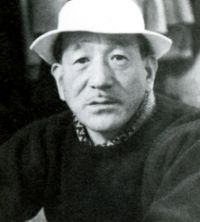
This past year, I saw three old Japanese films by the same
director, Yasujiro Ozu, that
touched me more than any films in my memory. All
three feature the actress Setsuko
Hara. This is my report on those three
films. Read the full
thought here.
•On Living the Martial Way. 8 pp. August,
2007.
In the same way I did with the Foucault and Mishima
thoughts, I record underlines I made in a book years ago
and comment on them, a book I have gone back to a number
of times since that first reading. The book is
Living the Martial Way by Forrest Morgan. My
focus is on the application of what Morgan calls the
warrior mind-set to daily life. Read the full thought here.
•On Big Sur. 2 pp.
September, 2007.
Excerpts from the book Big Sur by Jack Kerouac; although in
some cases I may not have copied them down
exactly as they were in the book. Read the full thought here.
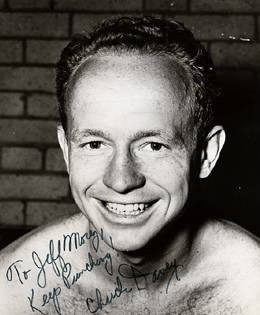
•On Chuck Davey 7
pp. October, 2007.
Chuck Davey was a boxer prominent in
the 1950s. I went back to a few pages I had written
about him back in
2002 and filed away. This thought is about what
came up for me as I revisited this writing. Read the full thought here.
•On Victoria’s Dogs 6pp.
November, 2007
Victoria Stilwell is an animal trainer who straightens out
unruly dogs on the Animal Planet show, "It's Me or the
Dog."
I think I'm learning something from Victoria about
straightening out unruly people. Read
the full thought here.
•On John Cheever 3 pp.
November, 2007
Entries from the journals of novelist John Cheever written
in the last months of his life. Read
the full thought here.
Some passages from the book By Force of Will by Scott
Donaldson about the political outlook of Ernest
Hemingway. Read the full
thought here.
•On Leonard Schiller 2pp.
November, 2007
From the
novel by Brian Morton, Starting Out in the Evening. A
young woman has contacted Leonard Schiller, a
novelist in his
seventies, requesting to meet him as part of writing a
masters thesis on his work. Read
the full thought here.
• On the Death of Faron
Young 2pp. December, 2007
Faron Young was a
country music star from the late 1950s to the 1980s, a
honky-tonk singer and entertainer
in the mold of
Hank Williams. Read the
full thought here.
• On The Beans Story 2
pp. December, 2007
Beans, a Boston terrier
(at least nominally), was the beloved family dog when I was
little. Beans was “put to sleep,”
as they say, when I was
about three—I think he had just gotten old. Beans was
often the subject of discussion
when my much-older
brother and sister and their spouses came to the house for
Sunday dinner. There was one
Beans story, so to
speak, that was repeated time and again. Read the full thought here.
• On Falconer 2pp. January, 2008
John Cheever’s novel
Falconer ends with convict Ezekiel Farragut’s escape from
prison (New York: Knopf, 1977). Read the
full thought here.
David
Crosby is a singer/songwriter who was prominent in the 1960s
and ‘70s. He developed a very serious
drug problem
in the years of his prominence, the subject of this
thought. Included are excerpts from two hospital
in-take
reports in late 1983. Following the excerpts is my
commentary. Read the full
thought here.
• On Aldous Huxley, 14 pp.,
February, 2008.
Aldous Huxley
(1894-1963) was a British-born novelist and essayist who
lived the latter part of his life in the United
States. He
is best known for his novel Brave New World, published in
1932. Brave New World is the ironic
depiction of a
“utopia” in which people are brainwashed into subordination,
accommodation, and a mindless,
shallow, though happy,
existence by the government and its agents.
Later in life, Huxley became associated with
spiritual and
mystical concerns and experimentation with drugs
reputed to be mind-expanding, such as mescaline.
This thought
contains my commentaries on excerpts from a biography of
Huxley. Read the full
thought here.
• On Living the Artist’s Way,
10 pp., February, 2008.
Robert
Henri (1865-1929) was a prominent American
painter. Not long before his death, the Arts Council
of
New York chose him as
one of the top three living American artists. Henri
was also a popular and influential
teacher of art. Henri’s
ideas on art and life were collected by a former student and
published as a book in 1923
entitled The Art Spirit. This
thought is made up of excerpts from that book. Read the full thought here.
• On Personal Health II:
From Fear to Rage, 9 pp., March, 2008
This thought is an
update on “On Personal Health,” which I wrote back in August
of 2007. Read the full thought here.
• On Jack Nicholson, 3 pp., March, 2008.
Things the actor Jack
Nicholson said about himself to journalists over the span of
his lengthy career in films.
In one instance it is
something a friend attributed to him. Read the full thought here.
•
On Woody Harrelson, 5 pp., March, 2008
Actor Woody Harrelson first came to
prominence as the bartender on the hit television series
“Cheers.” He has gone
on to an active big
screen career, including starring in director Oliver Stone’s
film “Natural Born Killers.” He
continues to act in
both lead and supporting roles in films, and has become an
environmental activist. This thought
is made up of quotes
from Harrelson. Read the full
thought here.
• On the Death of James Whale, 2 pp., March, 2008
British-born film
director James Whale is best known
for directing the sophisticated and morbidly
humorous horror classics
“Frankenstein” and “Bride of Frankenstein” in the
1930s. By the 1950s he was
retired, essentially
discarded by the Hollywood movie studios. Read the full thought here.
• On Arthur Bremer, 3 pp., April, 2008.
On May 15, 1972,
twenty-one-old Arthur Bremer
shot presidential candidate George Wallace at a rally
in a Laurel,
Maryland shopping center, paralyzing Wallace for life.
Read the full thought here.
•On The Punisher, 1 p, April, 2008.
Comic
book superheroes tend to abide by the law and stay away
from killing. One of Marvel
“Monsieur Hire” is a
1989 French film directed by Patrice Leconte. This
thought is dialogue from the film: Read the full thought here.
• On Dashiell Hammett, 1 p., June, 2008.
Dashiell Hammett (1894-1961)
was an American author best known for his hardboiled
detective fiction. This
thought is the last words he
wrote for publication. Read the
full thought here.
In 1982, at 76 years of age,
the Irish playwright Samuel Beckett (“Waiting for Godot,”
“Endgame”) wrote
a play without spoken words
for German television entitled “Nacht und Traüme.”
This thought is a description
of the play. Read the full thought here.
•
On Arthur Schopenhauer, 1p., August, 2008.
Arthur Schopenhauer was a German
philosopher. From the age of 45 until his death 27
years later, Schopenhauer
every day followed the same
routine. Read the full
thought here.
• On
Steve Ditko, 4 pp., August, 2008.
The success of the recent
Spider-Man movies has brought new prominence to the artist
who drew Spider-Man,
Steve Ditko. This is my
explanation of what to many is a very enigmatic man. Read the full thought here.
•On
Philippe Petit, 3pp., August, 2008
Last night, I saw a documentary,
“Man on Wire,” which recounted the planning and execution in
1974 of a high
wire walk by Frenchman Philippe
Petit across the space between the Twin Towers of the World
Trade Center
in Manhattan. This thought is
my reaction to it. Read the full
thought here.
•On
Gorgeous George, 5 pp., September, 2008.
Gorgeous George was the biggest
name in professional wrestling in the 1950s.
This is an account of one of his
matches. Read the full thought here.
• On the
Death of Eddie Waitkus. 3 pp., September 2008.
In June of 1949, Eddie Waitkus was
a 29-year-old veteran of the Pacific war and an all-star
caliber first
baseman for the Philadelphia
Phillies major league baseball team. Read the full thought here.
• On
John Lennon, 7 pp., October, 2008.
This thought is essentially a
reflection on the ex-Beatle John Lennon’s relationship near
the end of his life
with a woman named May Pang. Read
the full thought here.
• On
Hayden Carruth, 2 pp., October, 2008.
Hayden Carruth
was best known as a major poet, but he was also a critic,
essayist, novelist, and autobiographer.
He died at 87 on September
29th, 2008. Read the full
thought here.
Philosopher, critic, novelist, and
dramatist Jean-Paul Sartre has singular eminence in world
letters. His earliest
novel, Nausea, was published in
1938. It is made up of the diary entries of a French
writer Antoine Roquentin
(a stand-in for Sartre himself?) that depict
Roquentin’s struggle to come to grips with the meaning and
direction
of his life. This thought is excerpts
from this fictional diary. Read
the full thought here.
• On Richard
Yates’ Former Girlfriend, 1p., December, 2008.
Natalie Bowen had been an old girlfriend
of writer Richard Yates (1926-92). Yates is best known
for his 1961
novel Revolutionary Road. In 1972,
Bowen received a phone call from Yates. Read the full thought here.
• On Sending
A Message With Joan Allen, 1 p., December, 2008.
Producer Jeremy Bolt says casting
three-time Academy Award nominee Joan Allen in his 2008 film
“Death Race”
was to send the message that “Death
Race” is an A film and not a low-class genre movie. Read the full thought here.
• On Don
Logan’s Bad Attitude, 2pp., January, 2009.
Don Logan is a character in the film
“Sexy Beast” (2001). Portrayed by the actor Ben
Kingsley, middle-aged, working
class Brit, fierce bird-of-prey persona,
small, compact, muscular, ramrod-straight posture, shaved
head, mustache and
goatee, form-fitting short sleeve
dress white shirt, grey dress pants, shined shoes. The
scene, a commercial airliner filled with
passengers, ready to take
off. Read the full thought here.
• On Ginger’s
Dress, 3pp., January, 2009.
Ginger Rogers (1911-1995) was twenty-three
years old in 1934 and preparing a duet with the legendary
dancer Fred Astaire
(1899-1987) for the film “Top Hat,” their
second film together. This thought has to do with a
conflict that arose over what
dress Ginger should wear for her dance with
Fred. I think the way Ginger handled this episode
illustrates exemplary care for
one’s work, and great personal integrity and
courage. And I think it also says something about how
a parent can encourage
those qualities. Read
the full thought here.
• On John Updike, 2 pp.,
January, 2009.
The writer John Updike died of cancer on
January 27, 2009. He was 76. The evening I
learned of his death, I retrieved my
copy of his memoirs (entitled
Self-Consciousness) from the bookshelf and paged through it,
pausing to read a few pages here
and there. A couple of passages
particularly caught my eye. Read
the full thought here.
• On Ted
Hughes. 4pp., February, 2009.
English poet Ted Hughes (1930-1998) near the
end of his life was designated Poet Laureate of Great
Britain. This thought
is made up of excerpts from his letters.
Read the full thought here.
• On Philip
Roth, 1 p., March, 2009.
This thought is an excerpt from Philip Roth’s
novel, The Dying Animal. “The only thing you
understand about the old
when you are not old is that . . .” Read the full thought here.
• On the Death of
Jean-Paul Sartre, 5 pp., April, 2009.
Jean-Paul Sartre, 1905-1980, was a French
philosopher, novelist, playwright, and political
activist. He was one of the
leading intellectuals of the twentieth
century. An earlier thought on this site deals with
his novel Nausea. The material
in this throught was taken from Adieux: A
Farewell to Sartre, written by Sartre’s lifelong companion,
Simone de Beauvoir. Read the complete
thought here.
• On Personal
Health III: George Valliant and Vitamin D, 7 pp., June,
2009.
I recently read a magazine article (“What Makes Us
Happy?,” Atlantic, June 2009) about the Harvard Study of
Adult
Development, the most exhaustive investigation of
personal well-being ever conducted, and the chief analyst of
its
lessons, psychiatrist George Valliant. Read the full thought
here.
• On Being a
Modern Day Spinoza, 7 pp., September, 2009.
Even the quickest perusal of this web
site makes it clear that my outlook doesn't play well at all
in the university in which
I am a professor. From time to
time, people ask me how my university deals with me, as well
as how I manage both
personally and professionally in such a
context. This thought discusses what I make of what is
going on with me currently
in this regard. Read the full thought here.
• On The
Captive, 3 pp., September, 2009.
An excerpt from the film "La Captive"
(2000), written and directed by Chantal Akerman. Read the excerpt here.
A page from J.M. Coetzee's
autobiographical novel, Diary of a Bad Year. Read the page here.
• On
Priorities and Next Steps, 5pp., December, 2009.
You and I will live better to
the extent that we know what we are fundamentally about as
individual, mortal human
beings. Read the full thought here.
• On
Class Even Without Joan Allen, 2 pp., January, 2010.
In a thought for this site back in December of
2008 entitled "On Sending a Message with Joan Allen," I
reported that the
producer of the film "Death Race" had said that
he cast the prestigious actress Joan Allen in his movie in
order to send the
message that his was a high-class
film. I thought about this producer while
watching the DVD of season one of Showtime's
hit series "Dexter." Read
the full thought here.
• On Hyenas, 2
pp, January, 2010.
In our time, anyone writing from the
perspective of respect and concern for European heritage,
white gentiles, as I have, is going
to come under fire, and I've taken some hits in
the media, on the Internet, and from
organizations. Particularly interesting to
me, much of it has come from other white
gentiles. I've come up with ways to perceive and
deal with these people. Read the full thought
here.
• On Twyla
Tharp, 3pp., March, 2010.
Twyla Tharp is one of America's greatest
dance choreographers, with a career spanning over forty
years. In her book,
Twyla Tharp: The Creative Habit, she
poses and answers the question, When faced with stupidity,
hostility, intransigence,
laziness, or indifference in others, how
do you respond? Read the full
thought here.
• On Cocoons
and Butterflies, 7 pp., March, 2010.
Dear Jack--
Give my regards to Watson. Next
time I get to the Twin Cities it would be great for the
three of us to get together.
I haven't seen him since high
school. Read the full e-mail
message here.
•On
"Unchained Melody," 4 pp., March, 2010
With my deafness, I can't hear
music at all, except in my dreams, where I hear it
perfectly, magnificently, I'm sorry
to wake up. Last night I heard,
experienced fully, gloriously, the popular song "Unchained
Melody." Read the
full thought here.
• On
the Death of Rainer Werner Fassbinder. 1p., May, 2010.
Rainer Werner Fassbinder (May 31, 1945 –
June 10, 1982) was a major filmmaker, writer, and actor in
post-World War II
Germany. On June 10th, 1982, Juliane
Lorenz, with whom Fassbinder was living, arrived home at
3:30 a.m. Read the
full
thought here.
• On
"Cloud 9," 5 pp., May, 2010.
I was captivated by a film on DVD last
night. The film was "Cloud 9," German, 2008, directed
by Andreas Dresen. Read the full thought
here.
•
On Scaredy Squirrel, 2 pp, June, 2010.
Scaredy Squirrel never leaves
his nut tree. He'd rather stay in his tree than risk
venturing out into the very scary
world. Read the full thought here.
•
On the Death of Artie Shaw, 3pp., July, 2010.
In the decade from 1935 to 1945, no
musician was more famous and admired than Artie
Shaw. Shaw--handsome,
brilliant, outspoken--was a
clarinetist and bandleader whose hit recordings sold
millions. Shaw lived life to the hilt:
his swinging personal life and
marriages to several movie stars made headlines. He
became an iconic figure of his time.
But now it is 2004 and Artie Shaw is
over 90 years old. Read the
complete thought here.
•
On Dick W. C. Anderson . . . And Me, 15 pp., July, 2010.
A memory came to me in a quiet
moment a couple of weeks ago of a man I encountered just
once many, many years
ago by the name of Dick W. C.
Anderson. Anderson wasn't one of the pillars of the
community, as they say. Just the
opposite. He had brutally murdered
a thirty-four-year-old mother of four children ages six to
thirteen, Carol Thompson,
early one morning in her up-scale
home in Saint Paul, Minnesota, where I grew up and around
where I was living at the
time. Read the complete thought here.
• On
Lessons for Our Daughter, 10 pp., August, 2010.
I have a just-turned-six-year-old
daughter. Among the concerns her mother and I are
dealing with currently is what to do
about lessons for her--dance and music lessons
and so on. Read the full
thought here.
• On
Lessons for Our Daughter 2, 5pp., September, 2010.
My six-year-old daughter's mother and I
are communicating from long range--she and my daughter live
on the west coast
and I live in Vermont--about what to do
about lessons for her, in dance, piano, and so on.
This thought is a continuation of
the last thought on this site, "On
Lessons for Our Daughter," and reading that one before
reading this one would help put this
writing in context. Read the full thought here.
• On
Lessons for Our Daughter 3, 10 pp., October, 2010.
This is the third in a series of thoughts that
involve my correspondence with her mother about lessons and
schooling for our
six-year-old daughter. You could read the two
previous thoughts--On Lessons for Our Daughter 1 and
2--before this one to get
some context, although I don't think you really
need to. This thought, in the form of a hypothetical
email message, is compiled
from parts of five emails I have sent over the
past several days. What I'm trying to get across here
is something of how I see
schooling and the responsibilities of parents
in that regard. Read the
full "email" here.
• On Lessons
For Our Daughter 4, 6pp., November, 2010.
This is the fourth in a series of reports of
conversations between my six-year-old daughter's mother and
me about lessons
and schooling for her. The first three are the
last three thoughts on this site, and reading them in order
will give you
background for this thought as well as provide you
with an overall picture of my perspective on these
concerns. My daughter
and her mother live on the West Coast of the U.S. and
I live in Vermont. Last week, I spent the better
part of a week with
them. I met my daughter's teacher during that
time. This thought includes excerpts from an email
from me following my
return to Vermont. Also here are portions of an
email to a student in an undergraduate university course on
sport in society
I am instructing. She had emailed me with her
thoughts in response to concerns I expressed in class that
my daughter will
participate in sport activities at the expense of
other involvements and areas of her development. Read the complete email
excerpts here.
• On
David Foster Wallace, 2 pp., December, 2010.
David Foster Wallace (1962-2008) was an
American novelist, short story writer, essayist, journalist,
and university professor.
In May of 2005, he delivered the
commencement address to the graduating class at Kenyon
College. With minor editing, this
thought is a portion of what he said on
that occasion. Read the excerpt
here.
• On
Evaluating Academic Scholarship, 3 pp., January, 2011.
There is movement afoot to assess the worth of
scholarship in higher education by objective, quantitative
methods--citation
count in publications, Internet traffic, where
something was published, that sort of thing--and thus take
human judgment out
of the equation. This thought is a position
statement on this approach I shared with the faculty at the
university where I teach. Read the full statement
here.
• On Saul Bellow, 1
p., January, 2011.
Three sentences from a letter the writer Saul Bellow
(1915-2005) wrote in 1975. Read
them here.
• On An Evening
Meal, 3 pp., February, 2011.
After five o'clock, Cheese Outlet--a
gourmet market, so the sign says--sells sandwiches for half
price. Read the full
thought here.
• On Jerry
Lewis' Socks, 6 pp., March, 2011.
This thought is to call attention to a
possible area of inquiry: how people who aren't better than
other people make
these other people think they are. Read the complete thought here.
• On Trying to
Charm the Uninterested, 3 pp., April, 2011.
In her recent memoir, Tina Fey shared that she
spent a lot of her early years trying to, as she put it,
"charm the
uninterested." I can personally relate to
that. Read the complete thought
here.
• On the
Death of Lincoln Kirstein, 2pp., June, 2011.
Lincoln Kirstein (born May 4, 1907) was an
American writer, art connoisseur, dance impresario, and
cultural figure in
New York City. Kirstein's remarkable
commitment, capability, and energy stimulated creativity and
accomplishment in
a number of the fine arts from the 1930s
through the 1980s. Now it was the 1990s and he was
well into his eighties. Read the complete
thought here.
• On
est and the Human Potential Movement, 19 pp., August,
2011.
A few weeks ago, I watched a DVD from Netflix
of a 2007 documentary called "Transformation: The Life and
Legacy of
Werner Erhard." Werner Erhard (born Jack
Rosenberg) had his fifteen minutes of fame (and infamy--is
this guy a huckster,
a con man?) back in the 1970s as a
personal-growth mogul. Werner Erhard's prominence was
linked to a self-improvement
training program he devised in the early 1970s
called est (lower case). I took the training in
1979. The documentary prompted
me to think back on a very formative period in
my life, from the late 1960s to the early 1980s, when I was
engaged with what
was known in those years as the human potential
movement. The est experience was part of that.
This thought is a recollection
of those years, and it amounts to an
intellectual autobiography. The human potential
movement has been forgotten, and the
major point of this thought is my contention
that there is much to be gained in our time by revisiting
it. The list of names and
writings here should be of help in that regard,
and I stand ready to assist anyone who wishes to explore any
or all of
the aspects of the human potential
movement. Read the thought here.
• On Brian
Daubach, 2 pp., September, 2011.
The past couple of days I read a biography of
the labor leader Joe Hill (William Adler, The Man Who Never
Died,
Bloomsbury, 2011). In 1914, Hill was
convicted of murder, and in 1915 he was executed by a Utah
firing squad amid
international controversy. Many thought
Hill was framed and put to death because of his radical
leanings as a prominent figure in
the International Workers of the World labor
organization, or Wobblies as they were called. Hill
became labor's most venerated
martyr and was immortalized in the ballad "I
Dreamed I Saw Joe Hill Last Night," a song celebrated
by Woody Guthrie and
Bob Dylan and such. Hill's real name was Joel
Hagglund, and I got to thinking about whether he would have
gone over as well,
or at all, if he hadn't changed his name.
Read the full thought here.
• On
Dog Shows, 4 pp., November, 2011.
I watch dog shows on the USA channel, I guess
it is, or maybe it's Animal Planet, or both. Well, and
this past weekend I
saw one on CBS. Read
the full thought here.
• On
Bloody Bill and Bloody Sam. 3 pp., November, 2011.
This past week, I read about a couple of
men associated with savage violence, one of them for
committing it and the other
for portraying it. One of them was
William T. Anderson (1838-1864), a pro-Confederate guerrilla
fighter during the Civil War,
whose untamed brutality toward Union
soldiers and pro-Union partisans prompted the nickname
Bloody Bill. The other was
film director and screenwriter Sam
Peckinpah (1925-1984), whose innovative and explicit
depiction of feral violence evoked
great controversy during the 1960s and
'70s. He was called Bloody Sam. What has
come to mind this past week prompted
by my encounter with Bloody Bill and
Bloody Sam is what this thought is about. Read the complete thought here.
• On Being a
Good Student in My Course, 3 pp., February, 2012.
At this writing, I am three weeks into the
semester as a professor instructing an undergraduate
university course in the social,
historical, and philosophical foundations of
education. It is a required course for students in the
elementary and secondary
education programs in my college. A
student in the course emailed me asking about writing we do
during the three-hour class
sessions on Wednesday afternoons and wanting to
set up a meeting with me to talk about it. Here is a
portion of my reply.
Reading it over, you'll pick up what I see
going on in teacher education in my college and my attitude
toward it, and more
fundamentally, what I think is involved in
being a good student in my course, and a good student
generally. Read the
reply portionhere.
• On
Unimpressives, 6 pp., March, 2012.
In this thought, I set out a construct and work
with it some. It is a category of human being: the
Unimpressive. Read the
full thought here.
• On the Death
of Telek, 2 pp., April, 2012.
Kay Summersby was a young, vivacious fashion model
who became General Dwight Eisenhower's driver in Britain
early in
the U.S.'s involvement in World War II.
Summersby's relationship with Ike, as she called him, grew
in intimacy to a companion
and confidant and woman-at-his-side in public events,
and eventually they began a romantic relationship.
Together, Kay and Ike
bought a little black Scottie puppy that Ike named
Telek. Read the full thought
here.
• On Being Hearing
Impaired, 7 pp., May, 2012.
A student enrolled in two courses in education I teach
at the university was also that semester in a communication
disorders
course and was assigned in that course to interview
someone with a communications disorder. She chose me as her
interviewee.
I am severely hearing impaired and use a cochlear
implant. She gave me a list of questions and asked me
to write out my answers
to them. This thought is a copy of her questions
and my answers. Read
the interview here.
• On Paul Fussell, 3
pp., June, 2012.
Paul Fussell died on May 23rd, 2012 in an assisted
living facility in Oregon. He was 88 years old.
Fussell was an American
cultural and literary historian and professor at
Connecticut College, Rutgers University, and the University
of Pennsylvania. His
scholarship dealt with a wide range of topics,
including eighteenth-century English literature and the
American class system. He
was best known to the general pubic for his writings
on World Wars I and II, which underscored the gap between
the romantic
myths and grand justifications of wars and the
terrifying and horrific realities confronted by the very
young men who fight them
and are maimed and slaughtered in them. Reading
his obituary in the New York Times put his name in the back
of my mind, and
a couple of days ago as I browsed the biographies
section in the library I noticed a memoir he had written in
1996 entitled Doing
Battle: The Making of a Skeptic (Little, Brown) and
checked it out. Read the full
thought here.
• On Michel
Houellebecq, 22 pp., June, 2012.
Michel Houellebecq (born 1956) is an
award-winning and controversial French writer of both
fiction and non-fiction. His
admirers consider him a literary provocateur in
the tradition of Marquis de Sade and Baudelaire, while his
detractors see him
as a sex-obsessed, racist, misogynist,
Islamophobic peddler of sleeze and shock. An email
exchange between Houellebecq and
the equally controversial intellectual and
journalist Bernard-Henri Levy was published in the 2008 book
Public Enemies: Dueling
Writers Take on Each Other and the World.
I'll go through my copy of Public Enemies and take note of
what I either underlined
or wrote in the margin when I read the book
about a year ago--the Houellebecq half--and offer whatever
comments or
thoughts those responses back then prompt in me
now. Read the full thought
here.
• On Making
Sense of Michael Haneke’s Films—And Things in General, 6
pp., July, 2012.
The past couple of weeks, I watched films of
Austrian director Michael Haneke. Immediately after
watching a film I
compared what film scholars wrote about it with
what had come up for me. Read the
complete thought here.
• On
Playing One Game at a Time and Putting Numbers on the
Board, 8 pp., July, 2012.
A good way to study the sport culture, or
any culture, any area of life, is to look at how it uses
language. In this thought,
I list some words and phrases one hears a
lot in the sports world. Read
the complete thought here.
•
On Being a Good Student in My Course (Revised), 5 pp.,
August, 2012.
As I write this thought, it is four
days until the beginning of the fall semester, 2012 at the
university where I am a professor.
I've decided this semester it would be
helpful if on the first day of classes I were to distribute
and discuss with my students a
statement outlining, as precisely
as I can, how I want them to approach their work in the
course and why. I wrote a three-page
statement with the heading, "Being
a Good Student in This Class." It is an expanded
version of the February 2012 thought on
this site with this same
title. It's different enough, I've decided, to warrant
it's inclusion here as a separate thought. Read the
complete statement here.
•
On a Dream, 1 p., September, 2012.
A dream I had a couple of nights
ago: I was in a bathroom. Or was it a bathroom?
There were no walls. There was only a
bathtub overflowing, water rushing
out, gushing; and a washbasin, a foot or two away, the same,
water pouring, falling,
reminiscent of a raging
waterfall. Someone had turned on the faucets full out
and left them on. Read the
complete dream here.
•
On the Death of Lillian Hellman, 2 pp., November, 2012.
Lillian Hellman, born in
1905, was a much-honored author of plays, film scripts, and
memoirs and an outspoken advocate for
left-wing causes. For
thirty years, she maintained a high profile relationship
with the mystery writer Dashiell Hammett that
ended in his death in
1961. She famously declared in a written statement
distributed following a 1952 appearance before
the
House Un-American Activities
Committee, which at the time was investigating communist
influences in the arts, “I cannot and
will not cut my conscience to
fit this year’s fashions.” She was one of the most
prominent and controversial women of her
era. But
now it was the early 1980s and Lillian Hellman was well into
her seventies and her health was failing drastically.
Read
the full thought here.
•On a Big Grey Poodle-Looking Dog, 1p., November, 2012.
It was 4:30 in the
afternoon on a crisp, overcast mid-week day in early
November in Burlington, Vermont. I was driving
to my townhouse, which
is at the top of a long hill. A hundred feet or so
from my destination, on my left, I approached five
people clustered
talking. Amid them were three dogs, one of which was a
big grey poodle-looking dog. Read
the complete
thought here.
•On
Nietzsche's
Maxim, 3 pp., November, 2012.
“That which doesn’t kill me makes
me stronger.” That’s one maxim just about everybody
knows and takes to heart. It's a
hopeful idea, but we need to keep
in mind that everything is what it is and isn’t everything
else. In this case, a maxim is
a maxim and real life is real
life. Read the complete
thought here.
• On
Becoming Who You Are, 5 pp., December, 2012.
On the home page of this site, I note
that my writing is part of my personal quest to live out
philosopher Friedrich
Nietzsche’s injunction to become what I
am. I wrote that when I began the site, over
five-and-a-half years ago at this writing,
and considered it to be true of me at
that time. This last year it has come home to me just
how true that statement was, and is
now: it is really true of me. In
this thought, I offer suggestions that may be helpful to
others who wish to follow this path. Read the full
thought here.
•On
“The Woman in the Fifth,” 5pp., January, 2013.
The most arresting and thought-provoking
film I have seen in recent memory is “The Woman in the
Fifth” (the Fifth refers to
a district in Paris) with Ethan Hawke and
Kristin Scott Thomas. It was released in theaters in
2011 and, at this writing, is
relatively new on DVD, where I saw it a
week ago. Read my thoughts
on the film here.
• On
Agreements and Pictures, 4pp., February, 2013.
Ideas from two self-help books I read a
few months ago have proved useful to me as rules to live by,
guides to living, however
best to put it. The books: Don
Miguel Ruiz, The Four Agreements (Amber-Allen Publishing,
1997); and William
Glasser,
Taking Charge of Your Life (iUniverse,
2011). Read the thought here.
• On
Obituaries, 4pp, March, 2013.
My advanced age prompts me to read a lot of
obituaries. I’m struck by how admirable all these
people were in their lives and
how their deaths weren’t all that bad as far as
deaths go, dying peacefully surrounded by their loved ones
and so forth. But
people whose lives weren't so rosy and didn’t
end so peacefully die too--what about their
obituaries? Read the complete
thought here.
• On
Precision, 6pp., March, 2013.
In the summer of 2010, LeBron James, the best
professional basketball player in the world, was a free
agent, as it is called.
Up to that point in his career he had played
for the Cleveland Cavaliers franchise in the National
Basketball Association, as
he was forced to do by the way the player
allocation system in the league operates. Now he was
able to sign a contract with
any team in the league. The big sports
media story that summer was should James re-sign with the
Cavs or go with another
team. As the decision date got closer,
the scuttlebutt was that James was going to take a
multi-year offer from the Miami Heat. I
decided it was in James’ best interests to stay
with the Cavs. As it turned out, James signed with the
Heat, and it is clear now
that he made the right choice. Where, I
ask myself, did I go wrong in my thinking in 2010? The
answer to that question
intrigues me because while it doesn’t matter a
whit whether I was right or wrong about what sport
exhibition company LeBron
James ought to work for, answering it might
teach me something about good decision-making, as well as
help me avoid being
wrong about truly important things up the
line. Read the complete
thought here.
• On Doing My
Job, 4 pp., April, 2013.
A few months ago, I spent time thinking about
what my job is, or better, what my jobs are, not just in the
university where
I teach but in the whole of my life. Read the full thought here.
• On
Impeccable Word, 2 pp., April, 2013.
A self-help book I found useful and recommend
is The Four Agreements: A Practical Guide to Personal
Freedom
(Amber-Allen, 1997). One of the four agreements
is to be immaculate with words, with language. Ruiz
calls it Impeccable
Word. I can’t remember exactly what Ruiz writes
about Impeccable Word, but the basic concept hit home and
got me thinking
about how people use language to depict and make
sense of reality. Read the
complete thought here.
• On
Pseudo-Self-Effacement, 6 pp., May, 2013.
In March of 2011, I wrote a thought
for this site entitled “Jerry Lewis’ Socks.” I was
trying to establish a field of inquiry, I
guess you could call it: how people
get it across that they are better than you are. I’ve
been paying attention since that 2011
thought to how people who are fawned over
get themselves in that position when they don’t really
deserve to be that high on
life’s totem pole. One of ways I've
picked up I’ll call the pseudo-self-effacement
technique. The basic idea with this
maneuver is you seem to be putting
yourself down, but what you are really doing is building
yourself up. Read the complete
thought here.
• On
The Daily Puppy, 2pp., June, 2013.
A highlight of my life these days is The
Daily Puppy. It’s one of those gadgets you can put on
the home page of the computer.
Every morning without fail, I check out
the picture and biography of the puppy for the day (here's Frankie, the last one mentiond
in the thought). Read the complete thought here.
• On
Skyline Pigeon, 1 p., July, 2013.
Skyline Pigeon is an Elton John song,
with lyrics by Bernie Taupin. Read the lyrics here.
•
On Bullying, 14 pp., July, 2013.
I certainly don’t consider myself
any kind of expert on bullying. Take what I offer here
as simply food for thought as
you ponder and act upon this
concern. Read the full thought
here.
•
On The Mower. 1 p., August, 2013.
A poem by Philip Larkin (1922-1985)
entitled The Mower, written in 1979. I am realizing it
has been a difficult year for me. Read the poem
here.
•
On Camus, 2 pp., December, 2013.
I was taken by a comment on the
Nobel Prize-winning French writer Albert Camus (1913-1960) I
read in The American
Scholar magazine online in December
of 2013. Read the full thought
here.
• On
Ernest Hemingway and Manhood, 5 pp., March, 2014.
I’ve been reading a lot about the writer
Ernest Hemingway lately with an emphasis on Ernest Hemingway
the man; I haven’t
been reading what he wrote. Read the complete thought here.
• On
Honing the Instrument, 5 pp., April, 2014.
By the instrument in this case, I
mean the tool you use to forge the best, most productive,
most satisfying life you can in your
time on this earth: your
physical and mental health and capability. Read the complete thought here.
• On
Fighting Up Close, 4 pp., April, 2014.
Years ago, when I was in West Virginia
writing a book about the white racial advocate William
Pierce, something an aide of
his, Bob Demarias, said to me has stuck
with me since. “If you are going to be one of us,” Bob
shared with me, “you are
going to have to be willing to fight up
close and get good at it." Read
the complete thought here.
•On
Toxic People, 3 pp., April, 2014.
Perusing the shelves of my local
public library, the title of a book, Toxic People: 10 Ways
of Dealing With People Who
Make Your Life Miserable, caught my
eye. Read the complete thought
here.
• On The
Present--And Future—State of Higher Education in America,
1p., April, 2014.
These days, when I feel the call to do
something, I stop and ask myself, “Is this any of my
business?” Read the complete
thought here.
• On
What the Donald Sterling Flap Brought Up for Me, 5 pp.,
April, 2014.
At this writing—late April,
2014—there is an enormous flap over what were deemed the
racist remarks of Donald Sterling,
the owner of the Los Angeles
Clippers professional basketball team, in a telephone
conversation with his girlfriend that has
gone public. I was struck by
the contrast between what I heard on the tape of the
conversation online and what I had gotten
from media reports and from people
I talked to. Read the
complete thought here.
• On
Free Throws in Basketball. 2 pp., May, 2014.
One of the challenges in life
is to see commonplace things with new eyes; another way to
say it, make the familiar strange.
One very familiar phenomenon
that has suddenly seemed strange to me is the free throw in
basketball. Read
the complete thought here.
•
On The Woman in the Fifth (2), 2 pp., July, 2014.
Fine works of art lend themselves
to multiple encounters and interpretations. With each
re-viewing, re-reading, whatever
the medium, come new experiences and
meanings. That has been true for me with the superb
film “The Woman in the Fifth,”
which I first saw in January of
2013 and wrote a thought about in this site. I watched
it again this week (early July, 2014) and
saw it very differently and, I'd
like to think, more clearly. Read the complete thought here.
•
On Doing Here Now, 4 pp., August, 2014.
I just finished reading Ram Dass’
latest book, Polishing the Mirror: How to Live from Your
Spiritual Heart, and had a
markedly different response to it
than I would have had in years past. Read
the complete thought here.
• On Arthur Schopenhauer and the Life of the Mind,
9 pp., August 2014.
Arthur Schopenhauer
(1788-1860) was a German philosopher best known for his
book, The World of Will and
Representation.
This thought is a series of Schopenhauer quotes from his
writings followed by my comments. Read
the complete thought here.
• On Paul Schrader, 8 pp., October, 2014.
Paul Schrader is a
screenwriter and director in his late sixties and still
active—at this writing he has a film with Nicolas Cage
about to be released—but his
prominence was at its peak in the 1970s and ‘80s, when he
received a great deal of attention from
critics and film buffs.
Schrader is best known for his screenplays for “Taxi
Driver,” released in 1976, and “Raging Bull,”
1980, and for writing and
directing “American Gigolo,” also in 1980. I have
spent a good amount of time the past couple of
weeks looking into Schrader’s
life and work and letting it take me where it takes
me—watching and reading about films,
Shrader’s or others’, reading
books and periodicals about someone or some topic that came
up in the Schrader study, and
reflecting on my own history
and current circumstance. This thought is to share
some of the outcomes of my Schrader-focused
inquiry, invite you to check
out Schrader and his films, and to suggest that you think
about whether the sort of thing I did with
Schrader would be a useful
activity for you. Read the
complete thought here.
•
On Chögyam Trungpa Rinpoche, 3 pp, October, 2014.
Elsewhere on this site, I
have written about my involvement with what came to be known
as the human potential movement,
which was prominent in the
1970s and ‘80s (see the August, 2011 thought, “On est and
the human potential movement").
Names associated with this
thrust in its heyday included psychologists Abraham Maslow,
Carl Rogers, and Fritz Perls;
journalist and tai chi
instructor George Leonard; writer on Zen Buddhism, Alan
Watts; the founder of the Esalen Institute
in
California, Michael
Murphy; and the founder of the personal growth training
program est (without capital letters),
Werner
Erhard. This thought is
to add a name to the above list of people associated with
the human potential movement, Chögyam
Trungpa Rinpoche, and to
recommend one of his books. Read
the complete thought here.
• On William Hazlitt, 2 pp., November, 2014.
William Hazlitt
(1778-1830) was an English philosopher, essayist, social
commentator, lecturer, journalist, literary critic, and
portraitist. Little known in our time, his
essays are arguably among the best ever written in the
English language. He also
dealt with candid
and revealing personal material: the title of one of his
essays, “On the Pleasures of Hating.” Hazlitt has been
called “the
original blogger.” Read the
complete thought here.
It was the day after
Christmas, 2014, in the early afternoon. The legendary
British pop singer Joe Cocker had recently died,
and that prompted me to check him out
on YouTube. I watched a performance of him singing his
classic hit, a cover of the
Beatles song, "With a Little
Help from My Friends." I found myself taking notice of
the taller of two women backup singers,
who was standing perhaps ten
feet to Cocker’s left with a microphone of her own.
Read the complete thought here. • On Factoids, 3 pp.,
January, 2015.
I took note of a letter
written on March 21st, 1985 by the late author Norman Mailer
to David Irving Shapiro in which Mailer
talked about the concept of a
factoid. Read the complete
thought here.
• On a Problem in the Fifth Grade (Part 1), 9 pp.,
January, 2015.
My ten-year old daughter, who
lives across the U.S. continent from me with her mother is
in the fifth grade. Her mother has
been reporting problems for
her in school. Read the complete
thought here.
• On a Problem in the Fifth Grade (Part 2), 10 pp.,
January, 2015.
My ten-year old daughter, who lives
across the U.S. continent from me with her mother, is in the
fifth grade. Her mother has
been reporting problems for her in
school. This continues the consideration of this issue
begun in Part 1, the thought
immediately preceding this
one. You can decide whether you need to read
Part 1 before you read this one; you probably
should, but I'm not sure. Read the complete thought here.
•
On a Problem in the Fifth Grade (Part 3), 5 pp., January,
2015.
My ten-year old daughter, who lives
across the U.S. continent from me with her mother, is in the
fifth grade. Her mother has
been reporting problems for her in
school. This continues the consideration of this issue
begun in Parts 1 and 2, the thoughts
immediately preceding this
one. You should read those two thoughts before you
read this one. Read the
complete thought here.
• On
This-and-That, 3 pp., January, 2015.
A reader of my writings, both in
journals and on this web site, wrote me several times using
the “contact me” email address on
this site. I was very
impressed with his messages. In his last
correspondence before this reply to him, he referred to the
novelist
and philosopher Ayn Rand
(1905-1982). Read the complete
reply here.
•
On Losing My Mind, 7 pp., January, 2015.
I had gotten an emailed reminder
that I had a dental hygiene appointment the next
Wednesday. So I'll enter it in my
appointment book--eleven
o’clock and hygienist’s name. What’s her
name? I had no idea. Read the complete thought here.
•
On Serving Yourself, 2 pp., January, 2015.
The 2015 Super Bowl between the
Seattle Seahawks and the New England Patriot is a few days
away. Speculations about the
game itself have taken a back seat
to a controversy over whether in the playoff game won by the
Patriots to get them into the
Super Bowl the Patriots illegally
lowered the air pressure in the footballs they used in the
game, making them easier to control in
the adverse weather prevailing
during the game. In particular, suspicion has centered
around whether star Patriots quarterback,
Tom Brady directed Patriots
personnel to decrease the air pressure in the balls.
At this writing, Brady’s culpability is still being
determined. Whether or not
Brady is guilty of any wrongdoing isn’t the focus
here. What is is a statement he made during a
radio call-in show during the heat
of the allegations. Read the
complete thought here.
I just finished watching an
Australian produced documentary, “Stop at Nothing: The Lance
Armstrong Story.” It wasn’t one
of my favorite films. Read the complete thought here.
•On Sheep to
Slaughter, 3 pp., April, 2015.
On July 22,
2011, 32-year-old Norwegian Anders Breivik set off a
bomb outside the offices of the Prime Minister and
the Ministry of Justice in central Oslo killing
eight people. He then
traveled to the nearby island of Utoya and shot dead
69 participants of a Workers’ Youth League
summer camp. In August of 2012, he was
convicted of mass murder,
causing a fatal explosion, and terrorism. This
writing isn’t about Breivik and his motivations,
personal or political—was he a madman
or a revolutionary?—or the
larger ideological and ethnic issues that provided the
context for his actions. Rather, it is about my
response to how ten teenagers died on
Utoya Island that July
day. Read the complete thought here.
Two days ago, I was browsing Amazon looking for a film
to watch.I
came upon a new (2015) documentary with an over-the-top
title that grabbed my attention,
“Love and Terror on the Howling
Plains of Nowhere.” Read the
full thought here.
A poem by Emily Dickinson I sent to my ten-year-old
daughter.Read the poem here.
• On Mortality, 13pp., July, 2015.
Last month, I turned 75.That got my attention. That is
geriatric old, no getting around it. For obvious
reasons, mortality has been on
my mind this past month.
Consider
this thought to be notes on what has come out of it.Read the complete thought here.
• On “Cache” and Quality, 4 pp., August, 2015.
A project I’ve set out for myself is to use the idea of
quality—high quality—as a guide to what I do in all
aspects of my life from here
forward.Read the complete thought here.
• On the Boxer, 1 p.,August,
2015.
With my serious hearing impairment I can’t hear music at
all.I
don’t know a trumpet from a saxophone and can’t tell you
what anybody’s
voice sounds like, and I
can’t discern melody at all.But
there’s one place I can hear perfectly: in my dreams.Last
night, I heard the old
song “The Boxer” sung by
Simon and Garfunkel with perfect clarity, including the
last verse.Read the complete thought here.
• On So Yong Kim, 4 pp.,
September, 2015.
This past couple of weeks, I viewed three films by the
Korean American independent filmmaker So Yong Kim.I found them
remarkable,
absolutely top of the line, and more, I believe these
three films have had a significant and lasting positive
impact on me
personally.Read
the full thought here.
By John Denver. The
lyrics and a link to the song here.
• On “River of No Return,” 5pp., October, 2015.
This past week, I read a biography of the
bad-boy-but-talented actor Robert Mitchum (1917-1997).The book
discussed a movie Mitchum
made in 1954
with Marilyn Monroe called “River of No Return.”It hit
me that I had seen that movie with my parents in
Milwaukee,
Wisconsin when it first came out. Read the complete thought here.
• On Yogi Bhajan, 12 pp., November, 2015.
In the late 1970s, I lived in Los Angeles for a year.Just about
every day during that time, I would drive to an ashram—a
center of
Eastern
thought and practice--to take an hour-long yoga class.I learned
eventually that I was getting the kundalini form of
yoga, and
that the
ashram was the creation of a Sikh guru from India who
went by the name of Yogi Bhajan (1929-2004). Read the complete thought here.
• On Living Blind, 11 pp., January, 2016.
This thought is a movie recommendation and a report on
the personal meaning I gave the film, and it is a
commitment to do some
work on myself.Read
the complete thought here.
• On Waiting10 pp., February, 2016.
I took note of a story I read in the newspaper a couple
of weeks ago about a dog in Japan named Hachiko, an Akita breed, born
in 1923. It
got me thinking about waiting, both generally and in my
own life. Read the
thought here.
• On Two Old People, 4pp., March, 2016.
Dialogue from the 2015 film “Youth.”A film director
in his late seventies and his lead actress, who is
around his age. Read the dialogue here.
• On the
Personal Worth of Fiction, 10 pp., March, 2016.
After a long lifetime of almost exclusively reading
non-fiction, in the last six months or so I’ve noted
that my life goes better if I
regularly read fiction. Read the complete thought here.
• On How a Kids’ Golf Tournament Could Have Better, 6
pp., May, 2016.
Recently, my eleven-year-old daughter played in a kids’
golf tournament.In
general, the tournament was nicely organized.
Still, I was left with
the impression that it could have been set up to be even
better than it was. Read the complete thought here.
• On Jenny Diski, 6 pp., May, 2016.
An April 29th, 2016 obituary in The New York Times
reported the death from cancer at 68 of a British writer
with the odd name of
Jenny Diski that I found
intriguing.Read the complete thought here.
• On Modeling the Best, 9 pp., June, 2016.
I have an eleven-year-old daughter.A recent
message from me to her mother contained some things
about learning and personal
growth, or development,
that I think have general applicability. Read the email excerpt here.
• On “The Assassination of Richard Nixon,” 3 pp.,
August, 2016.
This is a recommendation for film buffs that liked “Taxi
Driver.”Not
to disparage “Taxi Driver”--indeed, it is a fine film, a
classic—but
the real deal in the
loner-menace genre is an obscure 2004 Sean Penn film,
“The Assassination of Richard Nixon.”Read the complete
thought
• On The Hollywood Argyles and Kinji Shibuya, 9pp.,
September, 2016.
The Hollywood Argyles was a band and Kinji Shibuya was a
professional wrestler back in the 1950s and early ‘60s. Read the complete
thought here.
•
On "An American Trilogy," 1p., October, 2016.
A song Elvis Presley popularized.See the
song's lyrics and its creator's version here.
• On the Decline of NFL Television Ratings, 4 pp.,
October, 2016.
An email from me to a newspaper sports
columnist. Read
the email here.
• On Leonard Cohen, 1p., November, 2016.
Singer, songwriter, poet, novelist Leonard Cohen died on
November 7th, 2016.The lyrics to his song, “The Bird on the Wire.”
Read the lyrics here.
• On Football Players Making a Better World, 4 pp.,
December, 2106.
On December 17th, 2016, The New York Times reported that
University of Minnesota football players rescinded their
threatened boycott and
will play in the Holiday
Bowl game in San Diego on December 27th.They had said
they would not play in the game if the university didn’t
lift the suspensions of
10 players involved in what an internal
university investigation concluded
was sexual assault and sexual misconduct with
a woman, who, according to some
accounts, was 22-years-old and a student. It is clear
that the woman had had a lot to drink and behaved
very foolishly, but the
players were barbaric.But what I find most interesting in this case
at the time of this writing, mid-December, are
three things that didn’t happen.Read
my thoughts on the case here.
•On Epitetus, 38 pp., January, 2017.
Epictetus (50-135 AD) is the best-known philosopher
associated with the orientation to living known as
stoicism.In
this thought,
I offer my commentaries on
Epictetus quotes.Read the quotes and responses here.
• On Rider’s Rules for Cowboys and Cowgirls, 2 pp,
February, 2017.
As a kid back in the 1940s and ‘50s I was a big fan of
movie and TV cowboy Roy Rogers.Roy had what
he called “rider’s rules,” ten
standards for how to
conduct your life he’d send on a card if you wrote him.
Read
the complete thought here.
• On Snow Days, 2 pp., February, 2017.
To her delight, my twelve-year-old daughter had a snow
day today; no school, bad weather, too much snow. Ah yes, snow
days. I remember back
when I was first started my career in teaching in a high
school.Read
the complete thought here.
• On An Academy Award Injustice, 6pp., February,
2017.
“John Wick” is a 2014 film starring Keanu Reeves
directed by Chad Stahelski from a screenplay by Derek
Kolstad.Fine
film.I was
particularly taken
by Kolstad’s brilliant screenplay.Read the
complete thought here.
• On Children’s Writing, 4pp., February, 2017.
My 12-year-old daughter Dee’s mother and I have been
concerned that the middle school Dee goes to—she’s in
the seventh grade—isn’t
having her do enough
writing.Read
the complete thought here.
• On "Manchester by the Sea," 2pp., March, 2017.
Dialogue from the 2016 film, “Manchester by the Sea.”Read the
dialogue here.
• On Chuck Berry, 1p.,March,
2017.
Rock and roll
legend Chuck Berry died on March 18th, 2017.Read the
lyrics of his 1959 song “Memphis, Tennessee" here.
• On Derek Cianfrance, 2pp., March, 2017.
Derek Cianfrance is an American film director I
recommend you check out.Read my commentary on one of his films here.
• On Bert Cardullo, 6 pp., April, 2017.
Looking for a published interview with the late film
director Eric Rohmer by scholar and critic Bert
Cardullo, instead of the interview
I found a retraction notice.Read the
complete thought here.
• On Shirley Jackson, 2 pp., June, 2017.
Diary entries by the American writer Shirley Jackson
(1916-1965).Read
the entries here.
· On Cool
Names, 4 pp., September, 2017.
I’ve got a thing about people’s names.Read the
complete thought here.
• On Al Franken, et al., 4 pp., December, 2017.
Senator Al Franken from Minnesota has just announced
that he intends to resign for the Senate because of his
alleged sexual improprieties. He is the latest
of a string of prominent men, beginning with movie mogul
Harvey Weinstein, brought down by their purported sexual
misconduct.I wrote an
email message to a friend that gets across my take on
what has been front page news for weeks.Read the email
here.
• On Jerry Kindall, 2 pp., December, 2017.
Jerry Kindall died today, Christmas day, 2107.He was 82
years old.Kindall
was a legendary college baseball coach of the University
of
Arizona, and before that
a second baseman for the Chicago Cubs and other major
league baseball teams.He was a native of my home town,
Saint Paul, Minnesota.I have a
personal memory of him.Read the complete thought here.
Note: beginning in 2018, I will enter the latest
thought at the top rather than the bottom of the page.